
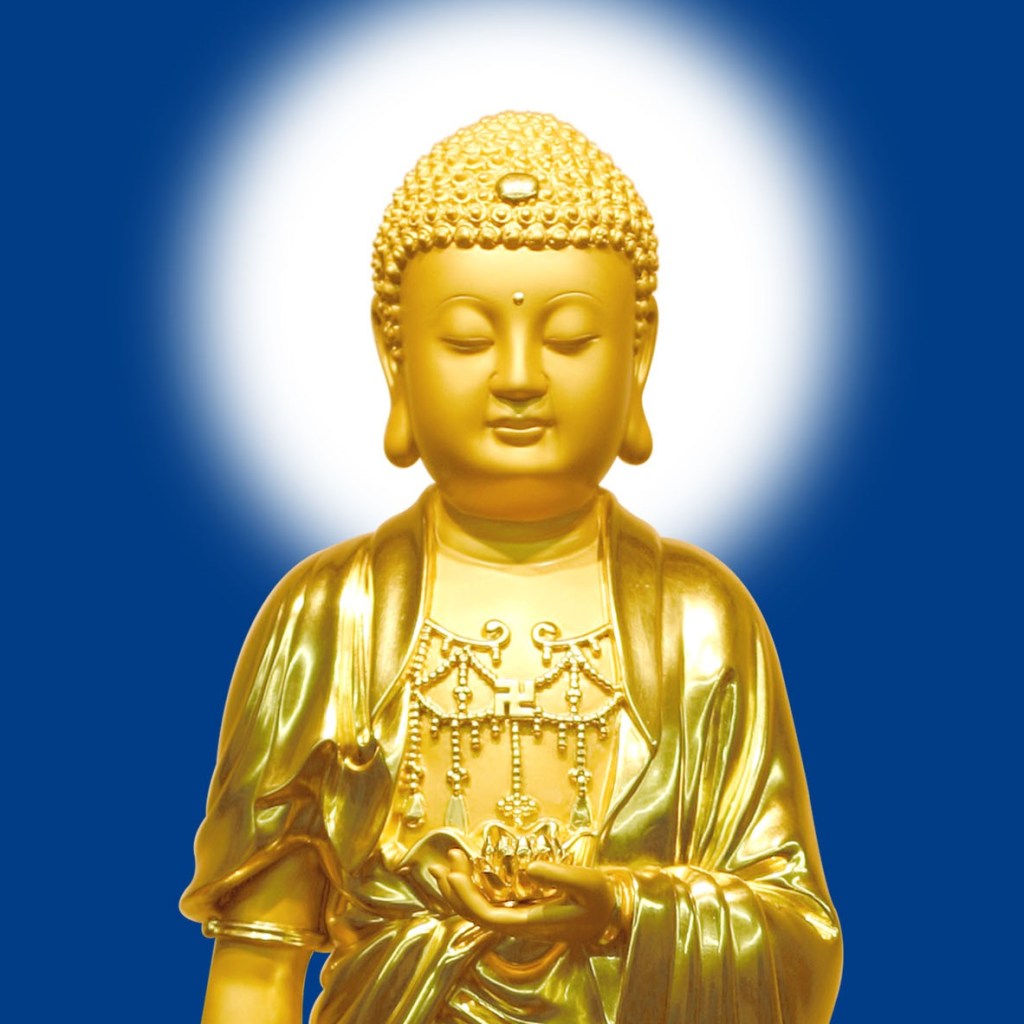
In this blog we will look at three types of giving that Sakyamuni Buddha taught. Before we look at the details, perhaps we should ask ourselves ‘Why should we give?’ We might have different answers. If we take it from an environmental perspective, to give is to return Mother Nature’s kindness and to bring back the peace and harmony that she well deserves.
Would you like to generate more positive energy? Share this documentary.
Listen to my teacher’s original lecture: The Three Types of Giving.
Listen to the podcast in English: The Three Types of Giving.
After experiencing the impact of the COVID-19 pandemic, perhaps all of us have developed a much deeper understanding of how huge an impact, be it good or bad, that we can make to ourselves and to this very fragile planet. It’s clear to us all that there’s a strong cause and effect relationship between what we do and what we receive in return.
And this is exactly the truth that Sakyamuni Buddha taught us, that is, none of us can escape from the karmic law of cause and effect. And the karmic law of cause and effect is not limited to this one life time, but infinite life times. And this is the basis of why we should give. Apart from that, perhaps each one of us wants to stay away from poverty, stupidity and short life. But, how? Sakyamuni Buddha taught us the proper ways of obtaining wealth, wisdom and long life. And they are the three types of giving, that is, the giving of wealth, the giving of teachings and the giving of fearlessness. These are the three main categories of giving. In other words, if we want to all the good things in life, we’ve got to learn to give first.
The Buddha also taught us that we should learn to give in order ‘to free ourselves from stinginess and greed’. But why should we free ourselves from stinginess and greed?
It’s because we have all sorts of afflictions, and stinginess and greed are the most severe out of all afflictions. Just in case some of us don’t understand the word ‘affliction’, an affliction means something that causes pain or suffering, and in Chinese it’s 煩惱. Now, let’s go back to our discussion on stinginess and greed. Why do stinginess and greed cause pain and suffering not just to ourselves but also to others?
Being unwilling to give what we have to others is stingy and it’s mean. Wanting to get what we don’t have is greed. Being greedy is the loss of control over our desires, thoughts, emotions, and so on. In other words, we become the slaves of our desires, thoughts, emotions, etc. If we don’t learn to control ourselves and be vigilant enough, greed will grow endlessly in us.
Now, let’s think about another question: what’s the most difficult thing to control in the world? Some of us might say, ‘Emm, it’s most difficult to control other people’s minds.’ But, is it really the case? How about our own minds? Can we easily control our own minds? How difficult is it to let go of our anger, let go of our hatreds and let go of our desires for things that we like, for example? In ancient China, the founder of Daoist teachings. He said, ‘Those who can conquer oneself are the strongest 自勝者強.’ In other words it’s most difficult to change ourselves. The Buddha taught us that ‘one’s surroundings change as one’s mind and thoughts change 依報隨著正報轉’. If we can change ourselves for better, the world will be a much better place.
Human beings are greedy for wealth, for someone good-looking, for fame, for food and for many other things. People indulge in anger, pleasure, sadness, likes, dislikes and desires. Human greed has reached a very severe level and has caused much physical and mental harm to the self. The planet on which we live has also been infected with sever disasters.
Yes, ‘infected’ is the word used here. just like being infected by diseases.
In Mahayana sutras the Buddha told us the causes of those disasters.
Firstly, greed attracts water-related disasters, e.g. river flood and the rise of sea level. But what is the cause of the disasters? The cause is the stinginess and greed of human beings living on this planet, and its consequence is terrible.
Secondly, anger attracts fire-related disasters, e.g. eruption of volcanos and global warming.
Thirdly, ignorance of sages’ teachings brings us wind-related disasters.
Fourthly, arrogance brings us earthquakes.
Fifthly, doubts on sages’ teachings, doubts on good teachings and doubts on the karmic law of cause and effect bring us landslides and land subsidence. Nowadays we often hear the news about landslides and land subsidence. These are the results of doubts.
We are so used to call these disasters ‘natural disasters’. However, all these disasters are actually not natural at all. They are nature’s response to our bad thoughts and deeds. Nature is the most beautiful. Nature is the healthiest. It is us human beings who have destroyed the natural ecosystem of the Earth and bring forth disasters. Similarly, the same principle applies to our bodies. These disasters are also reflected in the organs of our bodies, causing illnesses, pain and unnatural death.
That’s why the first thing that the Buddha taught us is to practise giving. To give is to help us develop the habit of letting go of things in our minds. In previous programmes we talked about letting go of things in our minds. ‘In our minds’ is the most important point. Are you feeling anxious? Are you restless? Do you often worry about things?
By practising letting go of things in our minds, we’ll gradually free ourselves from greed. For example, some of us might like chocolate very much previously. As soon as they saw a bar of chocolate, they wanted to have it immediately. But after practising giving, even if there’s a box of chocolate placed in front of them, they will not be easily tempted. They will be able to have chocolate in moderation. In our daily
Sakyamuni Buddha taught us three types of giving. The first type is to give wealth. The second one is to give one’s learning. And the third one is to give freedom from fear.
Now, let’s look another reason why we should give wealth.
Many of us must have thought about why some people in the world are rich and some are poor. There are many best-selling books talking about how to make money and become rich. But have we ever asked ourselves, ‘How many people really become rich after reading those books?’ Do we want to know the root cause of being rich or poor? Where do we find the answer? Well, Buddhist sutras have all the answers because they are records of what Sakyamuni Buddha taught before he entered parinirvana. Sakyamuni Buddha taught us that if a person is rich in this life, it is because they gave much wealth in their previous lives. If a person is poor in this life, it’s because they were very stingy and mean in previous lives, and not willing to give their wealth.
Speaking of wealth, there is internal and external wealth. External wealth refers to material possessions. Internal wealth refers to our bodies. We do housework when we are at home. We use our bodies to serve our family members. This is giving internal wealth. There are many people working as volunteers. What they do is giving internal wealth, the merit of which is greater than that of giving money.
What kind of giving is giving money? It is the giving of external wealth. Serving others here is the giving of internal wealth. The merit of giving internal wealth is greater than that of giving external wealth. We should practise giving with a selfless frame of mind. Whenever we think, we do not think of ourselves but think of others. ‘How do I love them? How do I care for them? How do I look after them? How do I help them?’ We do our best to do things properly. This is the right attitude to practise giving.
The most important giving is the giving of teachings. To do it, we should start with ourselves and set good examples for others to see. If we serve others with great generosity, our service is the giving. Be it the giving of internal or external wealth, so long as we are generous without being stingy, so long as we can benefit others at the sacrifice of our own benefit, then what we do has merits.
Now, let’s look at the giving of teachings. What is the giving of teachings? Why should we practise the giving of teachings? How do we do it?
For example, the Buddha taught us the six perfections, we practise them properly. The Buddha taught us to respect and love our parents and teachers, we practise it properly. We set good examples for others, this is teaching by example. Buddhist practitioners should practise everything that the Buddha’s teachings, be constantly mindful of his teachings, and often speak of his teachings. We must do it and set good examples for others. We should do it constantly over a long period of time without stopping. Nowadays, there will be no effect if we do it for a short period. It’s because in this day and age the bad habits of human beings are too deep-rooted and people have been contaminated for too long. The bad habits cannot be changed over a short period of time. It takes time to really change it. Normally, it takes about 3 to 5 years.
Today, helping people can be very hard and tiring. So we must practise the perfection of patience. Only with patience can you succeed. If you cannot be patient, you will not succeed. So how to be patient? Be patient to the last moment of our lives. I practise for a day so long as I live for a day. Sakyamuni Buddha set a good example for us. He showed us the 8 stages of a Buddha’s progress. He never slacked down for a single day throughout his life. He never allowed himself to live a day without practising. He really practised what he preached. It was why his teaching was successful. People believed him. He never lied. He truly practised all he preached.
The third type of giving is the giving of fearlessness. When others are in terror or fear, you help them to be freed from all fears and bring peace to their minds and bodies. This is the giving of fearlessness. In the world of today, disasters occur in high frequency, many people are restless and emotionally unstable. They find it difficult to settle their minds. They have lots of worries and much fear. How to help them? Learn sages’ teachings and the Buddha’s teachings together. It will calm us down. Even if there are disasters, we will not be in fear. Our minds will be pure and settled. A pure mind generates wisdom. Wisdom helps us overcome disasters safely. This is the giving of fearlessness. So when we teach sages’ teachings to others, we must set good examples for them to see, and then what we do would include all three types of giving mentioned above. This is something we should learn.
Wishing whoever reads this post good mental and physical health, peace, harmony, auspiciousness, happiness, long life and infinite wisdom. Thank you.
DEDICATION
The effort and gains of explaining, transmitting and listening to Buddhas’ teachings are dedicated to:
the entire Universe and all beings of all dimensions and all existences. May they all listen to Buddhas’ teachings, awaken to the truth of the Universe, be mindful of the name ‘Amituofo’ (Amitabha Buddha),
aspire to go to the Pure Land, and become Buddhas. (Read the above three times)
I pray to Buddhas and bodhisattvas for unconditionally solving all man-made and natural disasters around the globe.
For all of those who died in man-made wars and natural disasters across the world,
and for all of those who are related to me in all kinds of ways in this life and previous lives, may they listen to Buddhas’ teachings. May they awaken to the truth of the Universe, aspire to unearth their innate and most sincere, pure, equal and awakened mind, be single-mindedly mindful of Amituofo, aspire to go to the Pure Land so as to see Amituofo and listen to his teachings, removing all their delusions and unveiling their innate wisdom, gaining the real peace and happiness, instantly escaping from the cycle of birth and death, speedily becoming Buddhas, and helping all beings (in the entire Universe) like all other Buddhas.
The effort and gains are dedicated to the leaders of all countries on the Earth. May all countries be prosperous. May all disasters be solved. May the world enjoy eternal peace. I use the effort and gains to return the help from the enlightenment of Buddhas, by the correctness of Buddhas’ teachings, from the purity of sangha, from all beings, from my parents (in this life and previous lives), and from my country(ies). I also use the effort and gains to help alleviate the suffering of those who are already in and will be reborn into the animal realm, the ghost realm and hells as the result of their bad thoughts, speech and deeds. For anyone who sees and hears me chanting or being mindful of Amituofo and doing other good deeds, may they aspire to unearth their most sincere, pure, equal and awakened mind so as to go to the Pure Land of Ultimate Bliss, together with me, at the end of our present lives.
 Learning and Practising Buddhism
Leave a comment